AI GLOSSARY
Camunda / BPMN & AI
Camunda is the leading platform for not only modeling BPMN processes but also executing them productively. With AI agents and LLMs, processes are not merely automated but intelligently controlled—in a structured, traceable manner that complies with the EU AI Act.
✓ 80+ AI experts ✓ 25+ years of technology expertise ✓ ISO-certified ✓ Made in Germany
Blocks for Building
of a Camunda + AI Setup
Orchestration Patterns
From Service Task to Agent
% reduction in processing time at
typical process automation
Weeks
until the first pilot trial
Why BPMN and AI Go Hand in Hand
AI agents are powerful, but without a process framework, they are difficult to test, scale, and regulate. Camunda bridges this gap: BPMN provides structure, compliance, and traceability—while AI handles the intelligent sub-steps within that framework.
Traceability
Every process step and every AI decision is logged—perfect for audits and compliance with the EU AI Act.
Scalability
The Zeebe engine reliably executes processes even under heavy load—enterprise-ready by design.
Compliant with the EU AI Act
Verifiable control over data flows and decisions. High-risk AI becomes auditable.
System Integration
ERP, CRM, DMS, and AI models converge within the same BPMN process—no siloed thinking.
Human-in-the-Loop
Human approvals at critical points are built into the model from the outset, rather than being added as an afterthought.
Quick Adaptation
Processes are modified in the model—not by changing the code. The business unit is involved in the process.
What are Camunda and BPMN, and how does AI fit into this?
BPMN stands for Business Process Model and Notation —an internationally standardized graphical standard used to unambiguously model business processes. Camunda is one of the leading platforms for not only drawing such BPMN processes but also executing them as software.
In BPMN, processes are represented as diagrams consisting of activities, events, and decisions. Camunda handles the execution: It controls which task goes to which person or system and when, and logs everything in a traceable manner. Camunda refers to this as “process orchestration.”
The integration with AI opens up a new field. Language models and AI agents handle individual steps in the process: parsing documents, classifying requests, and drafting responses. The process itself remains structured and traceable—but the individual tasks are handled more intelligently.
This combination is particularly exciting for small and medium-sized businesses: BPMN ensures structure and compliance, while AI delivers efficiency and flexibility. Together, they create processes that are both rule-based and adaptive—the pragmatic path to truly intelligent processes.

Interaction: Camunda, BPMN, and AI Agents
There are various patterns for integrating Camunda and AI, which can be combined depending on the level of maturity and the use case. These are the eight we see most frequently in customer projects:
Standard Service Tasks
AI Classification
Document Processing
Generative Tasks
Agent-based steps
DMN + AI
Human Approval
Process Monitoring
Best Practices for Camunda + AI
These six principles make the difference between a prototype and a production environment:
- Process before AI: First, clearly model the process; then incorporate meaningful AI steps—not the other way around.
- Keep AI steps small: One LLM per task—not a single “super-agent” for everything in the process.
- Define a fallback: What happens if the AI is uncertain or fails? BPMN makes error paths visible.
- Human-in-the-Loop: Consciously delegate critical decisions to humans—Camunda has built-in Human Tasks.
- Prompt versioning: Treat prompts like code—versioning, testing, and CI/CD for AI steps.
- Monitoring & Evaluations: Continuously monitor the process and AI results—regressions are immediately visible.
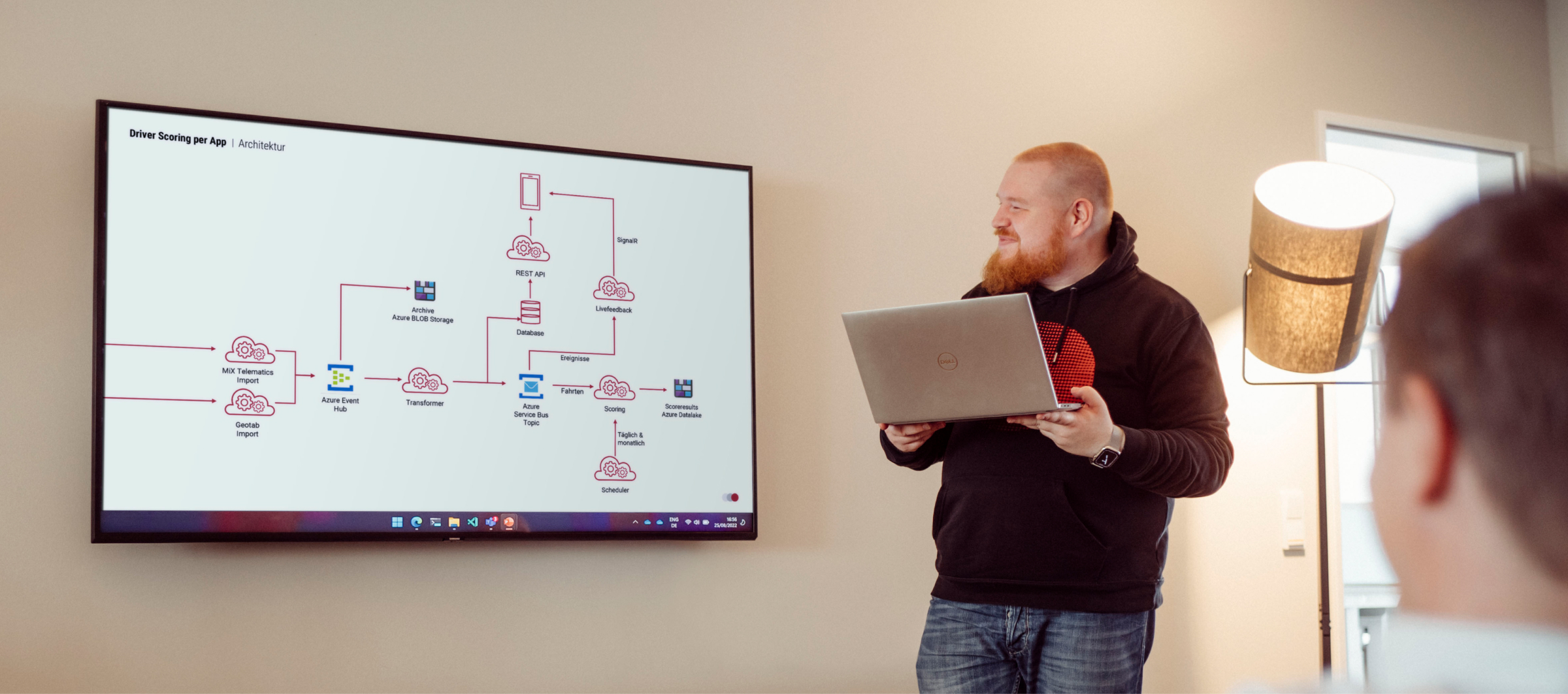
Approach 1
Agent-only
Freely planning AI agents without a fixed process. Ideal for exploratory prototypes—but low traceability.
Prototype
Approach 2
Hybrid (BPMN + Agent)
Camunda provides the structure; AI handles the intelligent sub-steps. Almost always the right choice for small and medium-sized businesses.
Standard
Approach 3
BPMN-only
Rigidly modeled processes without AI. Very high traceability—ideal for critical, rule-based processes.
Compliance
Common Mistakes in Camunda + AI
We see these five pitfalls particularly often in Camunda AI projects:
- Agents alone without a process framework: “Agent-only” is not scalable or auditable—this becomes apparent once the system goes into production, at the latest.
- Cramming AI into everything: Rule-based steps are mistakenly treated as AI-driven—leading to more errors and higher costs.
- No error path: If AI fails, the process grinds to a halt—BPMN compensation and fallbacks are mandatory.
- Processes that are too large: Monster BPMN models are difficult to maintain—opt for sub-processes and clear boundaries instead.
- Lack of change management: Business units aren’t on board, so usage remains low—adoption is a top priority.
Camunda vs. RPA vs. Agent-only
Three approaches that are often compared—each with clear strengths:
- RPA: Automates clicks in user interfaces—fast, but fragile and difficult to scale.
- Agent-only: Flexible, but difficult to audit without a process framework—acceptable for exploratory prototypes.
- Camunda + AI: Structured orchestration across systems, with AI driving the intelligent steps — the productive choice.

Contact Us Now
Frequently Asked Questions About Camunda, BPMN, and AI
-
Will AI Replace Process Modeling with BPMN?
No. AI agents alone, without a process framework, are too unstructured for many business applications. BPMN remains the backbone of execution, while AI handles the intelligent sub-steps—in a way that is traceable and maintainable.
-
Why Camunda and not traditional RPA?
RPA automates clicks in user interfaces but quickly reaches its limits. Camunda orchestrates complex processes across multiple systems—in an event-driven, scalable, and significantly more robust way.
-
Which AI services are compatible with Camunda?
Virtually all services accessible via API. Commonly used services include Azure OpenAI, Azure AI Foundry, specialized OCR and computer vision models, and custom ML models.
-
How do we ensure that AI processes comply with the EU AI Act?
Through clear process models, logging, human-in-the-loop intervention at critical points, and documented evaluation of AI steps. Camunda provides the technical foundation for many of these requirements.
-
When is it worth getting started?
As soon as multiple systems, people, and recurring tasks are involved—and there’s a significant volume of work. For one-time or very simple processes, the effort involved is often too great.
-
How are Camunda and multi-agent systems related?
Multi-agent systems can be embedded as AI building blocks in Camunda processes—Camunda handles the orchestration, while the MAS takes care of intelligent subtasks.
-
How much does a Camunda AI project cost?
The first production process typically takes 6–10 weeks, plus the cost of the Camunda license. We’ll provide a more precise estimate after the initial process analysis—which we do free of charge.
Camunda + AI for Your Processes
In a free initial consultation, we’ll analyze your process landscape and identify the process with the greatest potential for Camunda AI—including a concrete implementation proposal.
As a Camunda and AI partner for small and medium-sized businesses, we’ll take your processes from the BPMN model into productive, AI-powered operation—with clear governance and measurable business value.
What We Offer
- Camunda consulting —process analysis, BPMN modeling, and Camunda implementation.
- AI agents in processes — AI steps embedded in BPMN processes.
- AI monitoring — ongoing quality assurance of Camunda and AI execution.
- Multi-agent systems — the next level: multiple AI agents in orchestrated processes.