Eliminate unplanned downtime through predictive maintenance
Goal
Reduction of unplanned downtimes, predictable repair costs and optimized spare parts and personnel deployment planning through the use of data-based, predictive maintenance processes. At the same time, service and support requests should be managed more precisely, quickly and proactively in order to reliably meet SLAs and increase customer satisfaction.
Solution
With our modular digital platform, we are implementing a predictive maintenance solution that centrally consolidates and analyzes sensor data, maintenance histories and service information and translates them into specific recommendations for action.
AI-supported anomaly detection and models for the remaining service life (RUL) of critical components identify potential malfunction risks at an early stage. Service teams receive prioritized alerts, spare parts are automatically scheduled and technician deployments are optimally planned. This transforms maintenance from a reactive cost factor into a predictable, efficient and scalable process.

Initial situation
High availability, high pressure
A medium-sized manufacturer and operator of packaging machines in food production is struggling with frequent unplanned downtimes. Feeding and sealing modules in particular fail unexpectedly. The consequences: high spare parts costs, long technician deployment times and constant pressure to meet demanding SLAs.
The aim is to predict potential failures at an early stage, make repairs easier to plan and optimize both the stocking of spare parts and the deployment of technicians - without putting additional strain on the service teams.
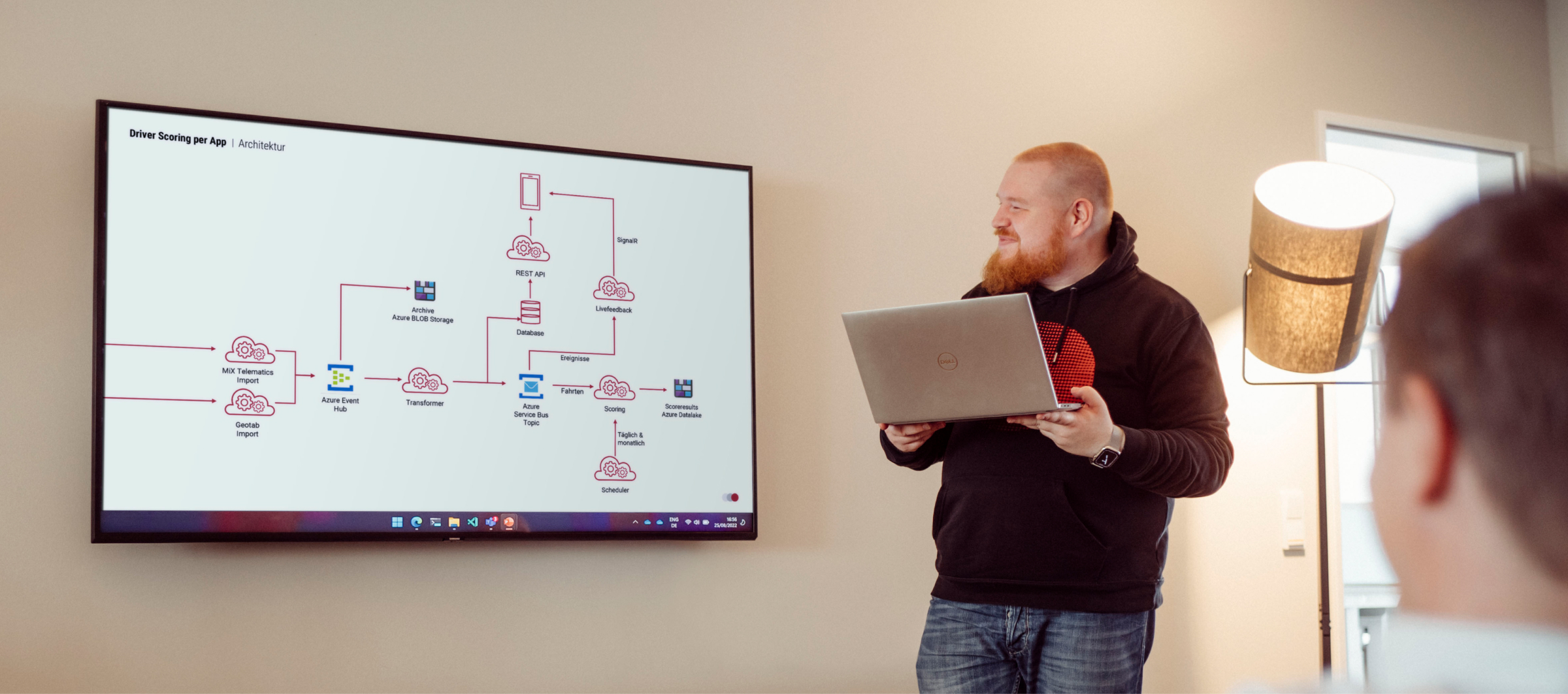
Solution concept
Data as the basis for predictive maintenance
Sensor data such as vibration, temperature and power consumption is continuously recorded on critical components. This data flows into a central data lake together with historical maintenance information and service tickets.
Based on this, AI models are used for condition-based anomaly detection and to calculate the remaining service life - especially for bearings, motors and heating elements.
Integration into existing processes
Identified risks are integrated directly into existing systems:
- Automatic alerts in the field service portal
- Reservation of required spare parts in ERP
- Optimized route and deployment planning for technicians
Dashboards provide a clear health score per machine and a prioritized list of measures for service and maintenance.

Sustainable added value
For service, logistics and management
- Reduced downtimes: Early detection of impending faults maximizes system availability.
- Improved service & support requests: Proactive, data-driven notifications enable more precise fault diagnoses and faster response times.
- Optimized spare parts logistics: Demand-oriented inventory planning avoids over- and understocking and reduces tied-up capital.
- Plannable repair costs: Transparent cost forecasts through predictive fault detection create budget security.
- Scalable maintenance processes: Automated alerts allow a larger plant portfolio with the same personnel deployment.
- Compliance & reporting: Complete maintenance history for audits, insurance and regulatory requirements.
Expected results after 12 months
- -40 % downtime
- -55 % emergency service calls
- -20 % spare parts inventory (less capital tied up)
- -30 % average repair time
- +25 percentage points SLA fulfillment
- -18 % Total maintenance costs

Pilot phase & Digital Platform
Rapid added value - prodot Digital Platform
Ten machines on a production line are connected in a 90-day proof of concept. Goal: reliably detect initial anomalies, integrate service processes and transparently display relevant KPIs.
Success criteria:
- At least one correctly identified impending fault
- Fewer than three false alarms per week
With our modular construction kit for digital platforms, we offer standardized and proven modules for specific requirements of industries and specialist departments, which can be combined and adapted to individual needs with little effort. You benefit from the development expertise and experience that we incorporate into our standard modules.
We would be happy to discuss your requirements with you in a non-binding online appointment.
Get in touch now!